









Menopause and The Skin
/ By Natalie Kingsley-Fieldgrass
Understanding the Changes and Supporting Skin Health
Menopause marks a significant biological transition, and while it is often discussed in terms of hormonal or reproductive health, the skin is one of the organs most visibly affected. As the body’s estrogen levels decline, the structure, hydration, and regenerative capacity of the skin gradually change. Understanding these processes allows us to approach menopausal skincare with both scientific clarity and thoughtful care.
The Hormonal Shift and Its Impact on Skin
Estrogen plays a central role in maintaining the integrity and vitality of the skin. It influences collagen production, skin thickness, hydration levels, and the function of the skin barrier. During menopause, as estrogen production decreases, the skin undergoes several measurable physiological changes.
One of the most notable is the reduction in collagen. Studies suggest that women can lose up to 30 percent of skin collagen within the first five years following menopause. Collagen is responsible for structural support within the dermis, and its decline contributes to increased skin laxity, fine lines, and wrinkles.
At the same time, elastin fibers—which help skin return to its original shape after stretching—also become less functional. The result is a gradual loss of firmness and resilience.
Vie De Mer Luxe Lift Invisible Youth Liquid Serum
Actions: Plumping, Anti-Wrinkle, Hydrating
Increased Dryness and Barrier Changes
Another hallmark of menopausal skin is increased dryness. Estrogen helps regulate the production of natural lipids in the skin, which are essential for maintaining the protective barrier that prevents moisture loss.
When estrogen declines, several changes occur:
• Reduced sebum production
• A weaker lipid barrier
• Increased transepidermal water loss
This combination can leave the skin feeling tight, rough, or more easily irritated. Many women notice that products they previously tolerated well may suddenly feel too harsh or sensitising.
Supporting the skin barrier becomes a key priority during this stage. Ingredients such as ceramides, fatty acids, glycerin, and hyaluronic acid help replenish moisture and reinforce the barrier function.
Biologique Recherche Lait E.V.
Actions: Nourishing, Hydrating, Barrier Strengthening
Slower Cell Renewal
Cell turnover naturally slows with age, but menopause can accelerate this process. The skin’s renewal cycle becomes less efficient, which may lead to a duller complexion and a buildup of dead skin cells on the surface.
This slower regeneration also affects how quickly the skin repairs itself after irritation or environmental stress.
Gentle exfoliation—through carefully formulated acids, enzymes, or retinoids—can help encourage healthier cell turnover and restore a smoother, more luminous appearance.
AUTEUR Definitive Lifting Toner
Actions: Brightening, Exfoliating, Regenerating
Changes in Skin Thickness and Sensitivity
Menopausal skin often becomes thinner as the dermal matrix gradually weakens. Reduced collagen, lower lipid levels, and changes in the microcirculation of the skin contribute to this thinning.
As a result, the skin may become:
• More fragile
• More reactive
• More prone to redness or irritation
A skincare routine during menopause benefits from a balance of active ingredients that support renewal, paired with soothing and barrier-strengthening formulations.
FUTURE 5 ELEMENTS Futurist V The Elixir
Actions: Redensifying, Renewing, Strengthening
Loss of Radiance and Elasticity
The cumulative effect of reduced collagen, slower renewal, and decreased hydration can make the skin appear less radiant than before. Skin may feel less plump and appear more uneven in tone or texture.
However, these changes are not simply cosmetic—they reflect the deeper structural evolution of the skin’s biology.
Modern skincare research offers a number of ingredients that can help support the skin during this stage, including retinoids for collagen stimulation, antioxidants to protect against environmental damage, and peptides that support the skin’s structural proteins.
VENN Collagen Intensive Phyto-Retinol Renewal Mask
Actions: Hydrating, Plumping (Collagen Stimulation), Brightening
With thoughtful care and an understanding of the underlying biology, the skin can remain resilient, luminous, and healthy throughout this life stage. Menopause is not simply a period of loss. It is a physiological transformation—one that invites a more intentional, informed approach to skin health and self-care.
About Me


LATEST YOUTUBE
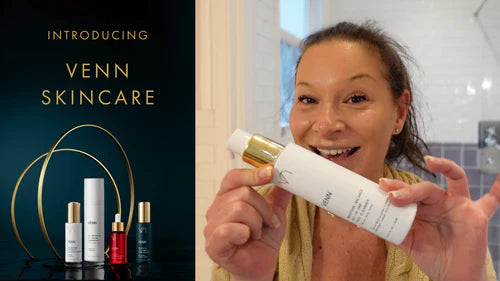
INTRODUCING VENN
May, 10, 2024